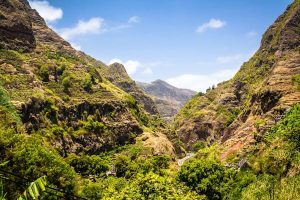

Europe’s countryside has some of the world’s most breathtaking landscapes, and experiencing them by rail gives you an intimate connection with the environment whilst minimising your carbon footprint. With rail passenger transport in the EU reaching a record 429 billion passenger-kilometres in 2023, more travellers are discovering the joys of slow, sustainable countryside travel.
- Rolling hills and rugged coasts – Discovering Ireland’s untamed countryside
Ireland’s landscapes unfold like pages from a storybook when viewed from a train window. The journey from Dublin to Killarney carries passengers through County Kerry’s emerald valleys, whilst the Westport Line hugs the Wild Atlantic Way’s coastline. These routes provide access to the Ring of Kerry’s sweeping coastal paths, Connemara’s wild bogs and the Wicklow Mountains’ peaks, with scenery shifting from pastoral lowlands to windswept cliffs.
- Alpine valleys and mountain foothills – Austria, Switzerland & Slovenia
The Alps reveal their majesty gradually when approached by rail. Austria’s historic Semmeringbahn winds through mountain foothills where villages cling to steep slopes. Switzerland’s celebrated routes, such as the Glacier Express, traverse high alpine passes before descending into meadowlands dotted with grazing cattle and mirror-still lakes. These train holidays allow travellers to witness how landscapes change from craggy peaks to river valleys, all whilst producing far fewer emissions than driving or flying.
- Vineyard-lined river valleys – France, Portugal & Germany
River valleys across Europe possess their own distinctive character. Portugal’s Douro Line follows the river through terraced vineyards cascading down hillsides. Germany’s Rhine Valley between Mainz and Cologne presents castle-topped cliffs and riverside wine villages. France’s routes through Alsace and the Loire Valley wind past châteaux and family-owned wineries where travellers can pause to sample local vintages. According to UK government transport statistics, train travel produces approximately 28 kg of CO2 equivalent on a long-distance journey, compared to 90 kg by car, making these leisurely countryside explorations more sustainable.
- Coastal countryside and island hinterlands – Spain, Italy & Croatia
Europe’s countryside goes beyond mountains and vineyards to coastal landscapes where olive groves meet the sea. Southern Spain’s routes traverse sun-baked hills dotted with whitewashed villages, whilst western Sicily’s rail lines pass through pine-wooded countryside. Croatia’s Dalmatian routes combine train and ferry connections, allowing travellers to explore island hinterlands at a relaxed pace.
- Northern wilderness and forested lowlands – Scandinavia & central Europe
Scandinavia’s railways reveal vast forests, lakes and remote tundra. Sweden, Norway and Finland’s routes penetrate wilderness areas where tree-lined tracks stretch for miles. Germany’s forested regions and the Czech and Slovak lowlands offer mediaeval towns emerging from dense woodlands, showcasing Europe’s quieter, more contemplative landscapes.
Europe’s countryside railways offer a sustainable, enriching way to discover the continent’s diverse landscapes at a pace that allows genuine appreciation of each region’s unique character.