Choosing between the two heavyweights of the Himalayas is a bit like choosing between a vintage sports car and a reliable, high-end SUV. Both have immense appeal, but they offer fundamentally different experiences. Last year, I found myself standing at the crossroads of this decision. On one side was the Khumbu region, home to Everest, the “big one.” On the other side was the Annapurna Sanctuary, a natural amphitheater of peaks that feels more like a hidden kingdom than a trekking trail.
I chose Annapurna. It wasn’t because I lacked the ambition for Everest; it was because I wanted a trek that felt more like a journey through a living culture and less like a high-altitude endurance test. This year, the Annapurna region felt like the right move, and after coming back, I am convinced it’s the best choice for anyone looking for variety over pure mountain fame.
The Contrast in Landscape
If you have ever been to the Everest region, you know the vibe. It is rugged, high-altitude, and largely barren once you get past Namche Bazaar. It is stunning, but there is a certain “sameness” to the grey rock and white ice after a few days.
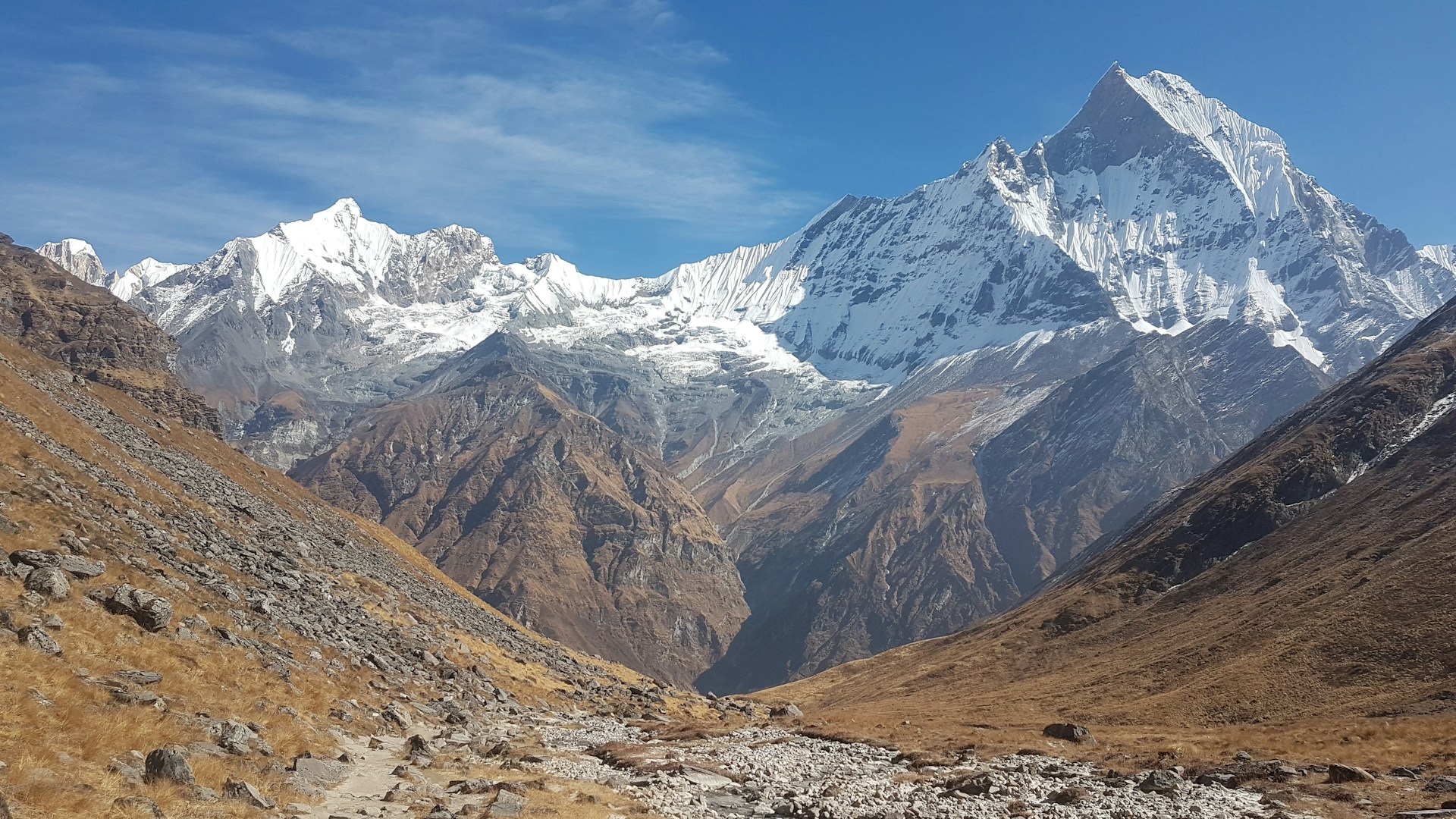
Annapurna is different. The diversity here is almost jarring. You start your walk in lush, subtropical forests where the air is thick and you can hear the rush of the Modi Khola river below. Within just a couple of days, you transition into massive rhododendron forests – which are spectacular if you catch them in bloom, and then finally break out into the alpine meadows. By the time you reach the sanctuary, you are surrounded by a ring of 7,000 and 8,000-meter peaks, but the journey to get there felt like traveling through three different countries.
Why the Sanctuary Beats the Base Camp
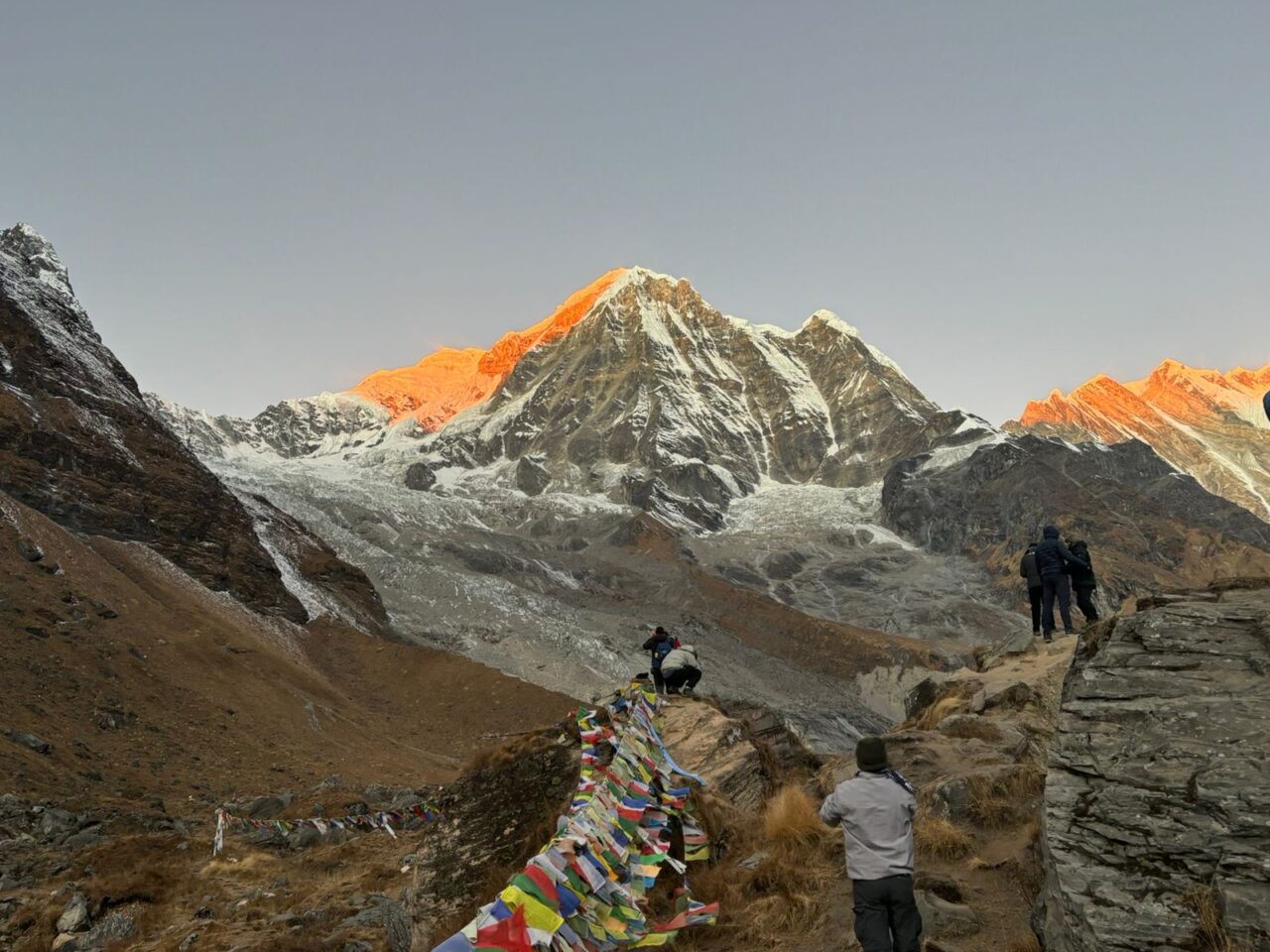
The term “Sanctuary” isn’t just a marketing name. Because the Annapurna Base Camp is tucked into a bowl of mountains, you get a 360-degree panoramic view that you simply don’t get at Everest Base Camp. At EBC, you are standing at the foot of the giants, but you actually can’t see the summit of Everest itself from the base. You have to hike up to Kala Patthar to get the view everyone sees on postcards.
In Annapurna, you wake up in your teahouse at base camp, step outside with a cup of coffee, and you are literally encircled by Annapurna I, Annapurna South, Machhapuchhre (Fishtail), and Hiunchuli. It feels intimate. You aren’t just looking at the mountains; you are inside them.
Logistics and Real-World Budgeting
One of the biggest factors for me this year was the logistics. Getting to the Everest region almost always involves the flight to Lukla. While that flight is an adventure in itself, it’s also a major bottleneck. If the weather turns, you are stuck for days. Annapurna is much more accessible. You can take a quick flight to Pokhara or even a tourist bus if you have the time and want to see the countryside.
When I sat down to plan the trip, I had to look at the numbers. While prices in Nepal have definitely risen over the last few years, the Annapurna side remains slightly more affordable because of easier transport. If you are curious about the specifics of budgeting, check out the 10 days abc trek package cost from Glorious Himalaya Company to see how those numbers break down for a guided experience. Having that extra wiggle room in the budget meant I didn’t have to stress about the cost of a hot shower or charging my camera gear at every stop. It made the whole experience feel less like a transaction and more like a vacation.
Comparison at a Glance
To help visualize why I leaned toward the sanctuary this time, here is how the two regions typically stack up:
| Feature | Annapurna Sanctuary (ABC) | Everest Region (EBC) |
| Max Altitude | 4,130m | 5,364m (5,545m at Kala Patthar) |
| Landscape | Jungle, Forest, Alpine | Alpine, Glacial, High Desert |
| Accessibility | Drive or Fly to Pokhara | Flight to Lukla (Weather Dependent) |
| Culture | Gurung & Magar Villages | Sherpa Culture |
| Risk | Lower Altitude Sickness Risk | Higher Altitude Sickness Risk |
The Human Element: Cultural Immersion
The Everest region is the land of the Sherpas, and their culture is fascinating. However, because the trail is so focused on the singular goal of EBC, it sometimes feels like the villages are just “stops” along a highway.
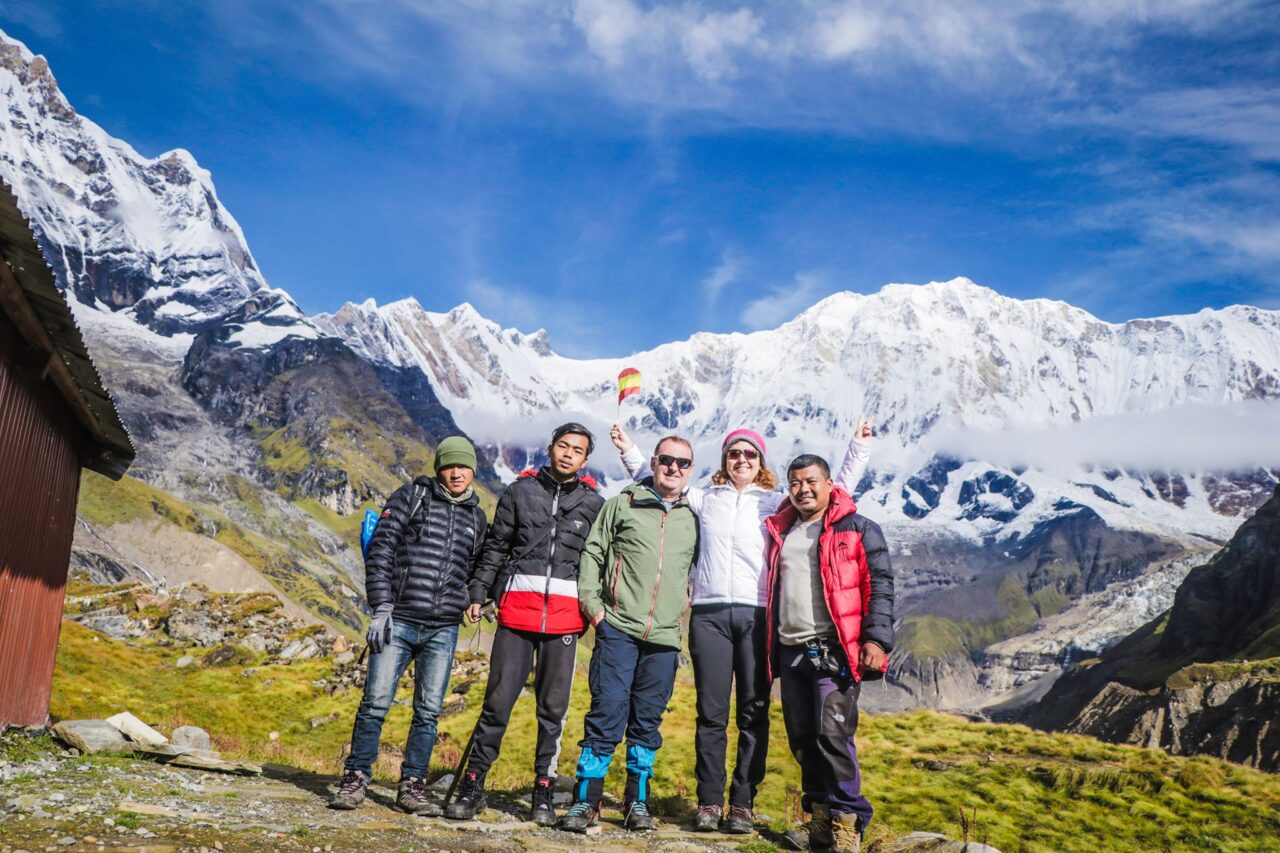
In the Annapurna region, you walk through Gurung and Magar villages like Ghandruk and Chhomrong. These are vibrant, living communities where farming is still the primary way of life. You see children walking to school, elderly women drying grains on woven mats, and a mix of Hindu and Buddhist traditions that overlap in really interesting ways. I spent an entire afternoon in Chhomrong just talking to a lodge owner about the history of the valley. You don’t get that same sense of “groundedness” when you are gasping for air at 5,000 meters in the Everest region.
The Difficulty Factor
Let’s be honest about the physical side. Everest is hard because of the altitude. You spend a lot of time above 4,000 meters, and that takes a toll on your body. The Annapurna Base Camp trek is “stair-heavy.” There are thousands of stone steps. My knees certainly felt it, but I preferred the physical workout of the stairs to the constant headache and lethargy that often comes with the extreme heights of the Khumbu.
In Annapurna, the maximum elevation is around 4,130 meters. It’s high enough to feel the thin air, but not so high that you spend half the trip worried about altitude sickness. It allows you to actually enjoy the scenery rather than just focusing on your next breath.
Final Thoughts: Which One for You?
If you are someone who needs to see the highest mountain in the world just to say you did it, then go to Everest. It is a legendary trek for a reason. But if you want a trek that offers a changing canvas of scenery, a deep dive into Nepalese village life, and a mountain view that wraps around you like a blanket, go to the Annapurna Sanctuary.
For me, the decision came down to how I wanted to feel at the end of the day. I wanted to feel tired but inspired, well-fed, and connected to the place I was walking through. Annapurna gave me all of that without the logistical headaches or the high-altitude burnout. It’s a classic for a reason, and even in 2026, it remains the soul of Himalayan trekking.