It is commonly assumed that longer vacations will give a person more fun, more excitement, and more overall satisfaction. There is nothing wrong with longer vacationing, especially if the budget allows for it, but in many cases, shorter weekend camping excursions can provide a greater amount of benefit, enjoyment, and relaxation than fewer but longer vacations. The logic behind choosing to plan regular weekend camping excursions may seem less logical than choosing to plan a single large vacation, but in reality, the advantages of shorter vacations add up to be greater than those of larger vacations.
The Planning Burden That Can Ruin Large Vacations
Planning a large vacation requires a great deal of time and energy. When planning a large vacation, a traveler must book accommodations ahead of time; obtain time off from work; arrange for pet care; secure mail and home security; etc. By the time all of these details have been arranged, the traveler feels a great deal of pressure to ensure that the vacation is successful. In contrast, weekend camping trips typically require very little planning and therefore, a traveler does not feel such a great burden to make sure that every detail of the trip is perfect.
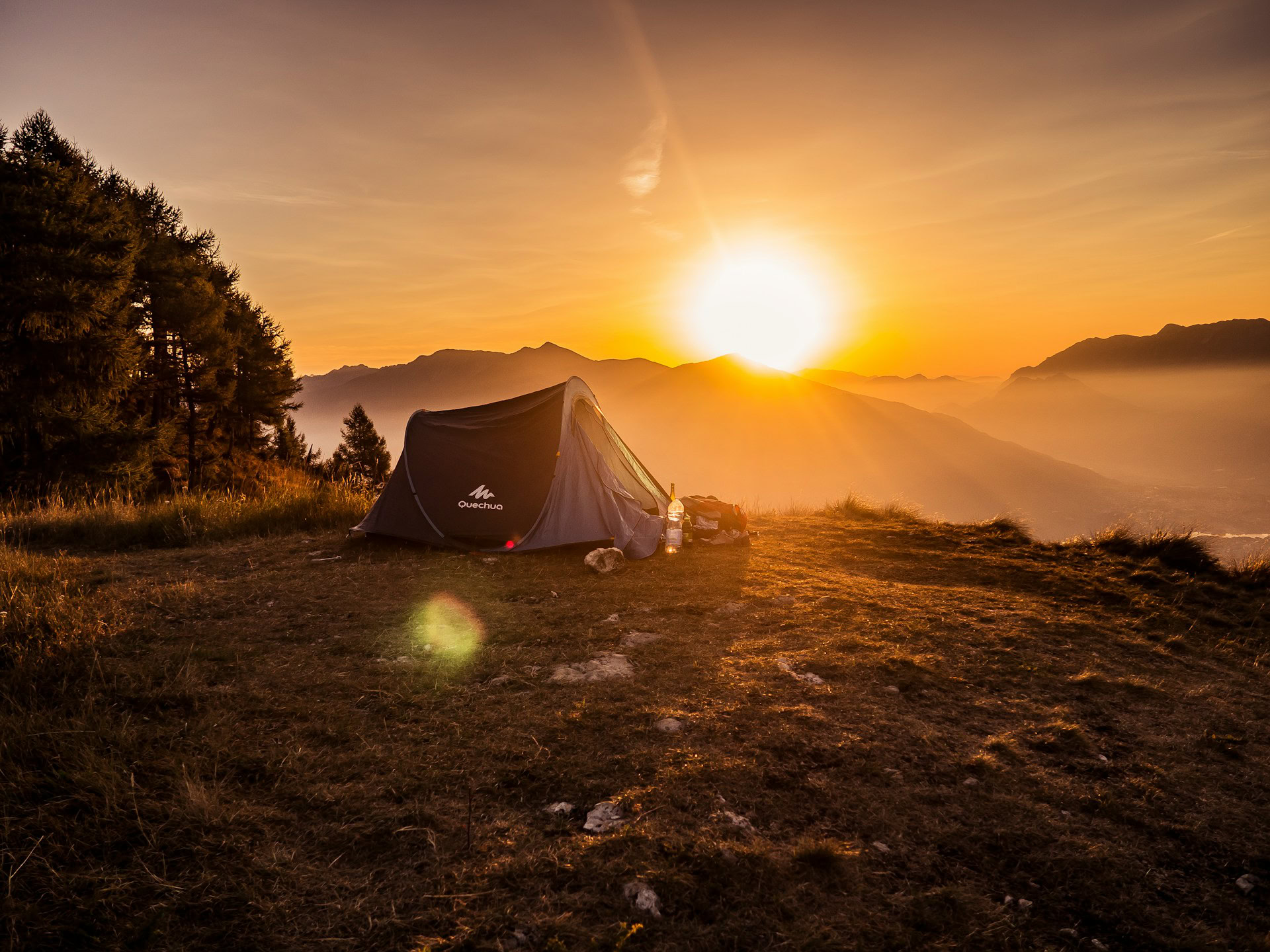
Weekend camping trips eliminate most of the planning required for other types of travel. For example, to go camping for the weekend, a traveler need only pack the car on Friday after work and drive a couple of hours to the destination, set up camp, enjoy two days of camping, and then return home on Sunday. Unlike a large vacation, weekend camping trips do not require travelers to reserve hotel rooms, buy airline tickets, or plan elaborate itineraries. Therefore, weekend camping trips offer a low barrier to entry and allow travelers to go camping more frequently. In fact, a family may only be able to afford to take a major vacation once a year, but they can easily go camping ten weekends in a row. The cumulative experience of those ten weekends can exceed the experience of a single week-long vacation. Additionally, since weekend camping trips allow travelers to visit a wider variety of locations and campsites throughout the year, travelers can gain more experience and build more confidence in their camping abilities.
The Cost Reality That Most People Fail to Consider
Large vacations can be quite expensive. Accommodations alone can be costly, with prices ranging anywhere from $100 to $500 per night for a family of four. And this does not include additional expenses such as meals, activities, fuel, and incidentals. As a result, a family of four can easily spend thousands of dollars on a single large vacation.
In contrast, weekend camping trips are relatively inexpensive. Many campgrounds charge between $30 and $50 per night for a family site, which would equal $60 to $100 for a two-night stay. Additionally, travelers can purchase firewood, groceries, and gas to use for their camping excursion, and the total expense for the entire weekend can range from $150 to $250. If a family were to go camping ten weekends in a row, the total expense would be $1,500 to $2,500, which is significantly less than the cost of a single large vacation.
Investment in Camping Gear Pays Off Quickly
While the initial cost of purchasing a camper trailer may appear to be a significant investment, the cost of owning a camper trailer can be offset by eliminating the cost of renting accommodations on future camping excursions. Additionally, owning a camper trailer can make camping easier and more convenient for families. Since camper trailers are essentially portable homes, families can arrive at their campsite, connect the utilities, and begin using the trailer immediately. Once the family arrives back home, they can wash dishes, clean the bathroom, and store clothing in the trailer. In addition, having a camper trailer can save families money in the long run, as they will not have to pay for rent on hotel rooms or for the cost of eating in restaurants.
Spontaneity Provides Benefits
Because weekend camping trips can occur spontaneously, families can be more flexible and adaptable in terms of scheduling. Families who want to go camping can check the weather forecast on a Friday afternoon, see that the weekend looks good, and decide to go. By the end of the day, they can be on their way to a campsite. This lack of structure allows families to relax and enjoy themselves without the pressure and expectations associated with longer vacations.
Additionally, spontaneous weekend camping trips encourage experimentation and creativity. Families can try a new campground, explore a new region, and experiment with a new method of camping. Because weekend camping trips are shorter and less formal than longer vacations, families can try new things and adjust plans based on how things go. If a particular type of camping does not work out, families can just go back home and try again next weekend.
Flexibility Creates Sustainability
Another benefit of spontaneous weekend camping trips is that they allow families to schedule camping around their lives rather than forcing them to put their lives on hold for a vacation. Families with kids often have scheduled events on the weekends, including school sports. Families can choose the weekends when the kids have free schedules and plan camping trips accordingly. Similarly, families whose work schedules are unpredictable can skip weeks when work gets busy and go camping more frequently when things slow down. By being able to adapt to changing schedules, families can continue to enjoy camping regularly rather than trying to cram all of their camping into a single week.
The Cumulative Experience of Frequent Nature Exposure
Studies have shown that exposure to nature can have positive effects on mental health and wellbeing. However, the studies suggest that these benefits come not from the total number of hours spent in nature, but from the frequency and consistency of the exposure. Spending time in nature consistently, even if it is just for a short period of time, can help reduce stress and improve wellbeing.
Because weekend camping trips allow families to expose themselves to nature consistently, they can help support mental health. When families go camping regularly, they establish a routine of spending time outside, regardless of whether it is for a couple of hours or the entire weekend. Additionally, families who go camping regularly often look forward to their next camping trip and often reflect on their past trips, both of which can contribute to a sense of calm and contentment.
Large vacations often disrupt families’ routines, causing significant disruptions to daily life. Families must rush to leave town, take time to relax at the beginning of the vacation, and then rush to return home. In contrast, weekend camping trips are generally easy transitions. Families can pack up and leave early in the morning and then settle right back into their normal routine upon returning home. Furthermore, since families go camping regularly, the transition from camping to non-camping is less dramatic and therefore less stressful.
Camping Skills Improve Through Repetition
Similar to many other activities, the skills used for camping improve with practice. The more a family camps, the more proficient they become at setting up and tearing down camp, preparing meals over a campfire, handling inclement weather, reading topographic maps, building fires, and other important aspects of camping. With consistent practice, families can become more efficient and confident in their camping abilities.
Since families who go camping regularly tend to build their skills incrementally, their camping trips become less stressful and more enjoyable. Families who go camping infrequently are forced to learn new skills each time they go, which can be frustrating and overwhelming.
Memories Are More Distinctive When Experiences Are Shorter
One surprising aspect of weekend camping trips is that families can create a greater number of distinctive memories from their weekend camping trips than from a single week-long vacation. While a week-long vacation can be fun and memorable, the individual days often blend together and become difficult to recall. At the end of a week-long vacation, many families report feeling like they experienced a general sense of adventure and relaxation, but cannot specifically recall individual days or events.
In contrast, weekend camping trips are more likely to be remembered individually because they are spaced apart and varied. Each weekend has its own unique characteristics, such as weather, scenery, and adventures. Since families create distinct memories for each of their weekend camping trips, the total memory bank created through the combination of all of their weekend camping trips tends to be greater than the memory bank created from a single week-long vacation.
Kids Remember Variety and Frequency More Than Duration
When families are traveling with young children, the children tend to remember experiences based on variety and frequency rather than duration. A child who goes camping six different weekends throughout the year is more likely to recall specific events and experiences from each trip than a child who goes on a single week-long camping vacation. This is because each weekend offers different weather conditions, different activities, and different adventures that stand out in the child’s memory.
Making It Work Long Term
The advantage of weekend camping is not that it completely replaces extended holidays. Rather, frequent short trips are more sustainable as a regular practice because they fit into life more easily, cost less, require less planning, and deliver benefits that compound over time.
Families who camp regularly on weekends often find they still take occasional longer trips, but those big holidays become bonuses rather than the only time they get away. The weekend trips maintain an ongoing connection to outdoor spaces and camping routines, while extended holidays provide opportunities for more ambitious destinations or experiences.
The key is recognizing that more is not always better when it comes to holiday length. Sometimes frequency beats duration, spontaneity beats elaborate planning, and simple regular escapes beat complex rare adventures. Weekend camping trips work because they are achievable, repeatable, and accumulate into something greater than their individual parts. They are not a compromise for when a real holiday is not possible. They represent a different approach entirely, and for many families, a better one that delivers more consistent joy, stronger memories, and greater overall value than the traditional model of saving everything for one big annual vacation.