
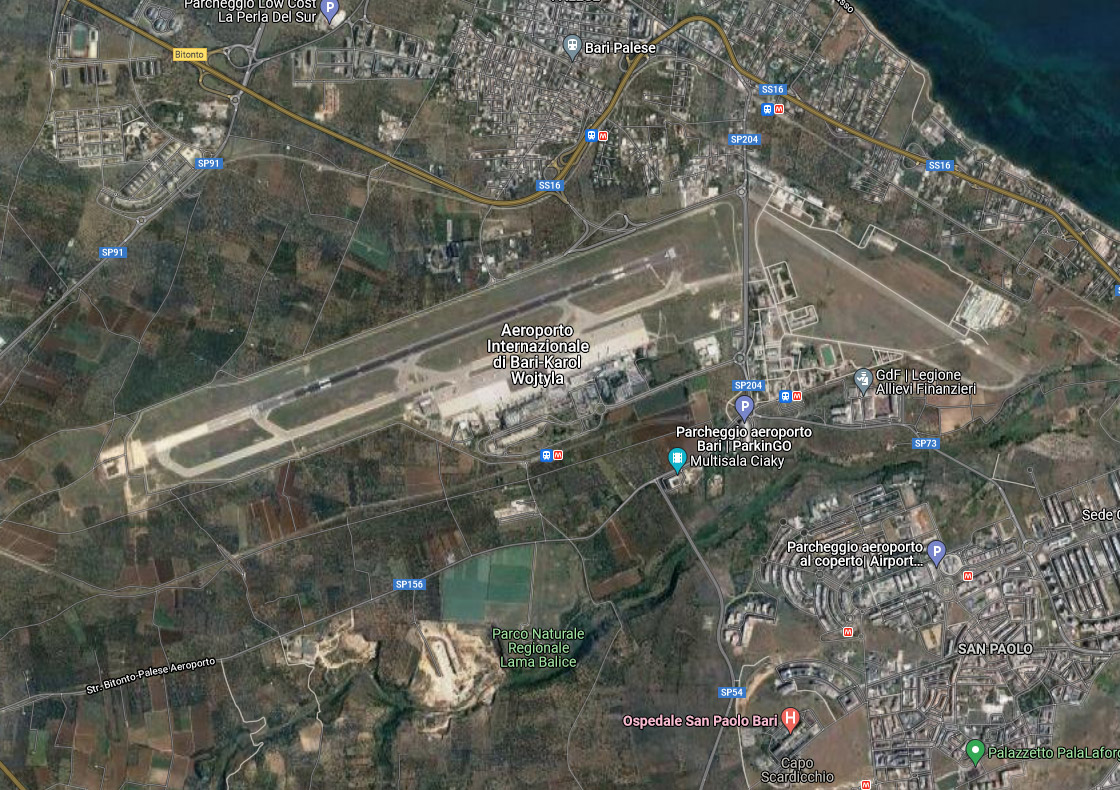
Let’s be honest: Puglia is stunning, but the public transport system is… well, an exercise in patience. If you look at Google Maps, everything looks like a breeze. In reality, between Sunday schedules that don’t exist, stations located in the middle of olive groves, and the 35°C heat, getting from Bari Airport to your hotel can feel like a triathlon.
Landing at Bari Airport feels like you’re right on the edge of something special. Within a couple of hours, you can be swimming under cliffs in Polignano, wandering through whitewashed streets in Ostuni, or exploring the trulli of Alberobello.
Between awkward connections, stations in the middle of nowhere, and the summer heat, even a short journey can feel longer than expected. After driving these roads and waiting for those trains more times than I’d like to admit, here is the unfiltered truth on how to handle the “Bari Arrival.”
The “Bari Centrale” Bottleneck
You’ve basically got four ways to move around:
- Train – Great between bigger towns, but you’ll need to get from the airport to Bari Centrale first.
- Bus – Cheap, but not always frequent and not ideal with bags.
- Taxi – Easy, but prices can vary (especially for longer journeys).
- Private transfer – The simplest option: someone meets you and takes you straight to your door.
Bari Airport (Palese) is not connected to the national rail line. To go anywhere south, you first have to get to the city center.
- The Metro: There’s a dedicated yellow line (Ferrotramviaria) that takes you to Bari Centrale in 15 minutes (~€5).
- The Insider Tip: If you just missed the metro, don’t wait 40 minutes for the next one. Grab the “Tempesta” shuttle bus (the white one). It often leaves sooner and gets you there for about the same price.
Polignano a Mare
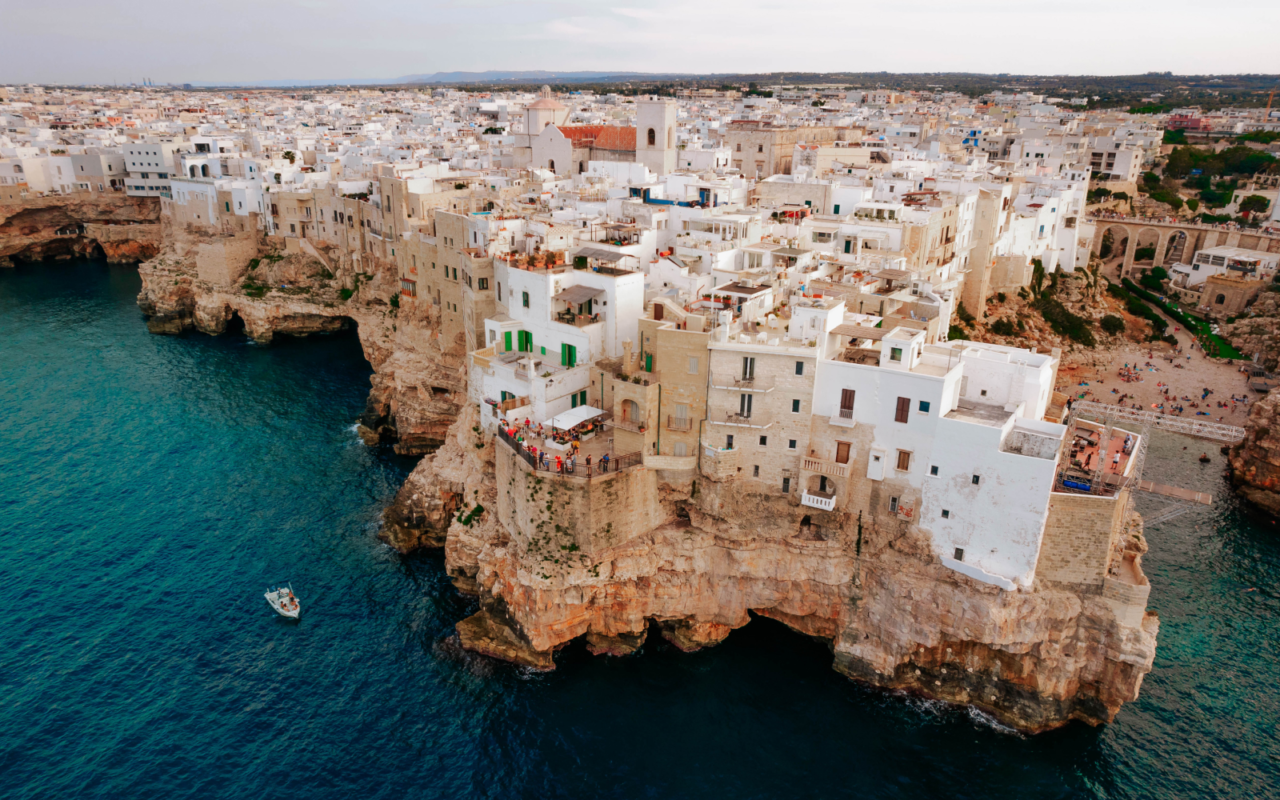
These are the easiest spots to reach, but there’s a catch. From Bari Centrale, you need to take a train, and finally make your way to your accommodation. This is usually top of the list, and it lives up to the hype. The cliffs, the water, that tiny beach… it’s all exactly as you imagine.
The station is in town, but if your Airbnb is in the historic center, you’ll be dragging your suitcase over jagged, ancient stones for 15 minutes. It’s a workout you didn’t ask for. It’s manageable, but not exactly the smooth arrival most people picture.
Monopoli
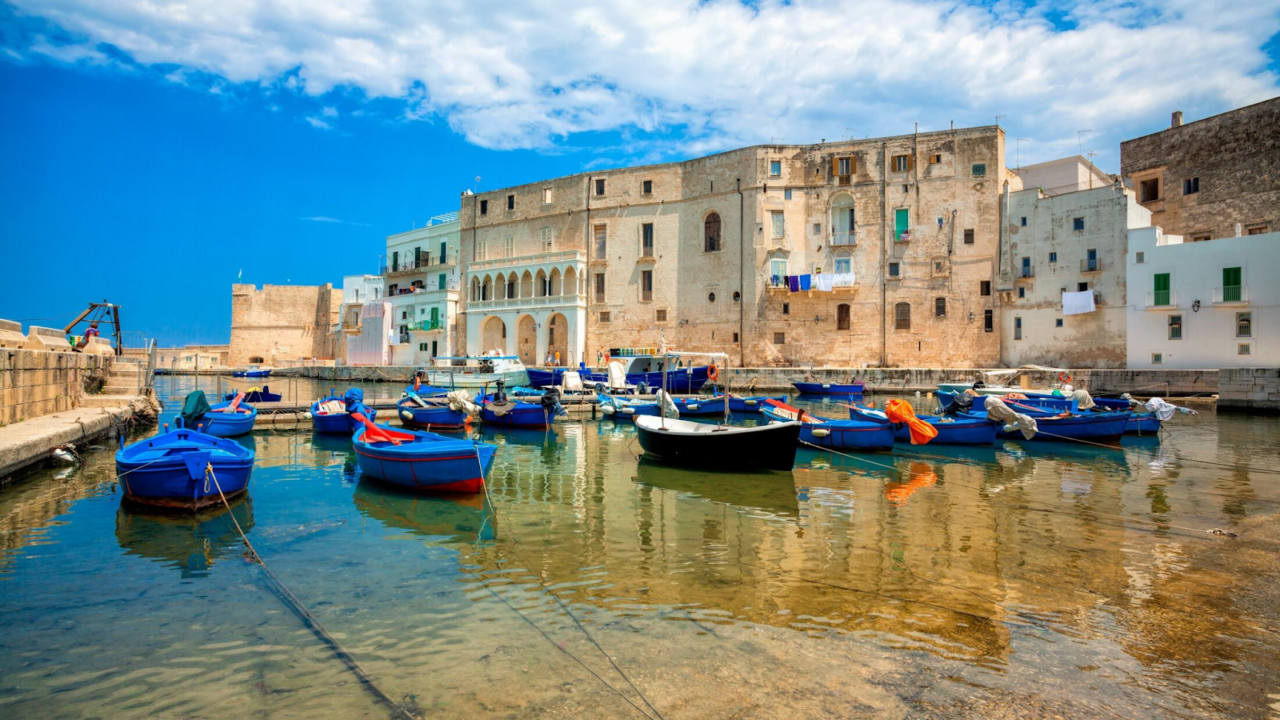
Just down the coast, Monopoli feels a bit more relaxed and less crowded, one of those places that ends up being a favourite.
The journey is similar to Polignano, but where things get tricky is the final part. Many of the most beautiful stays are outside the centre, in the countryside or near the coast.
That means even if the train gets you close, you’re often still left figuring out how to reach your accommodation. It’s one of those situations where everything technically works, but doesn’t quite connect seamlessly.
Alberobello

Alberobello is one of the most unique places in Italy, but getting there to the “Trulli” via public transport is a test of patience. You need: Metro to Bari Centrale + the FSE (Ferrovie Sud Est) train.
If you land later in the day, options become limited quickly, and what looked simple on a map can turn into a much longer trip.
For small groups especially, going directly from the airport can end up saving both time and energy.
- What they don’t tell you: FSE trains are notoriously slow and frequently replaced by buses with zero notice. If your flight lands after 6:00 PM, forget about reaching the Valle d’Itria by train.
Ostuni
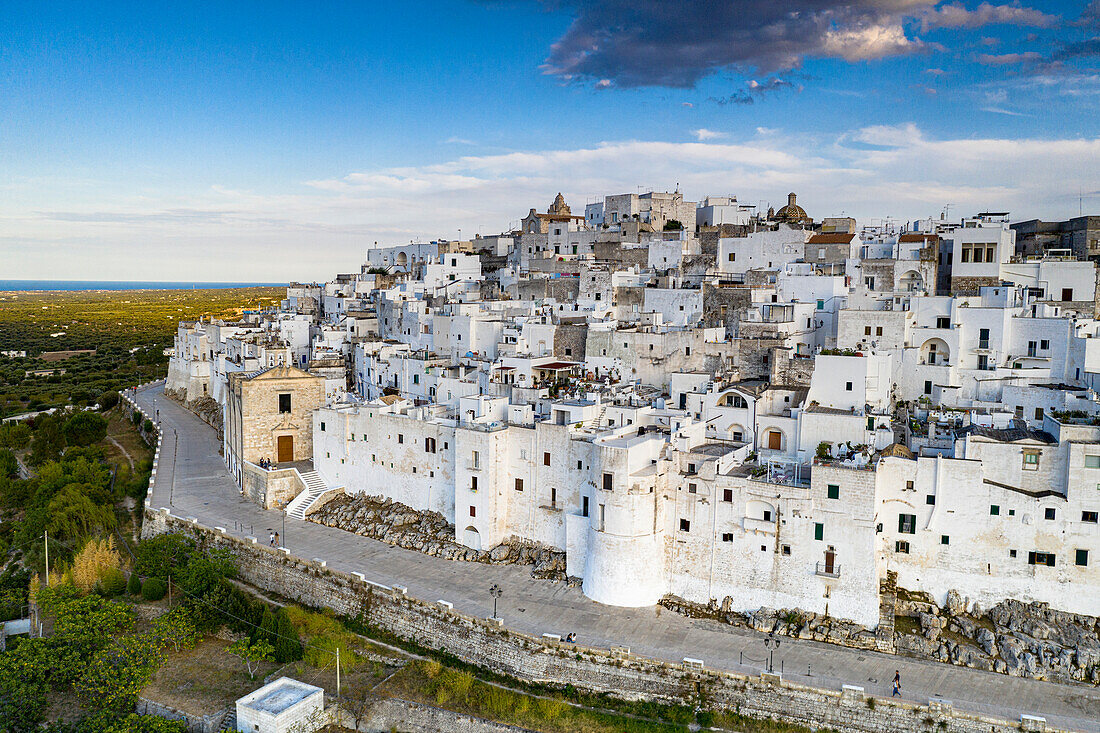
Ostuni is the “White City” on the hill.
The tricky part is that the train station is located well below the town 4km away. It might look close on a map, but that last stretch is not one you want to do on foot with luggage, especially in the summer.
There is a local connection, but it doesn’t always line up perfectly with train arrivals. Getting dropped closer to where you’re staying makes a huge difference to the overall experience. If you have bags, it’s better to arrange a pickup in advance.
Lecce
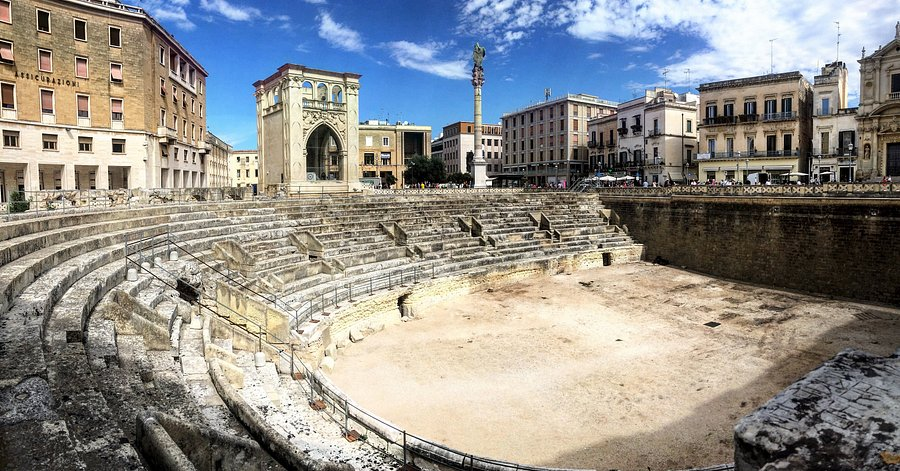
Further south, Lecce feels slightly different, more architectural, a bit more lively, and definitely worth the extra distance.
The train from Bari works well here and is one of the more straightforward routes in the region. It’s a good option if you’re travelling light and arriving during the day.
That said, if your flight lands late in the evening, connections become limited, and you may find yourself needing a backup plan, whether that’s staying overnight in Bari or arranging transport in advance.
When It’s Worth Keeping Things Simple
Puglia isn’t difficult to navigate, but it definitely rewards a bit of planning, especially for that first journey after landing.
From experience, things tend to go much more smoothly if you simplify the arrival, particularly if you’re landing in the evening, travelling with luggage, or heading somewhere outside a main town. It’s often that first stretch that ends up being more tiring than expected.
In those situations, going straight to your destination can save you from a series of small inconveniences that quickly add up.
If you’re planning to explore different beaches every day or move around a lot, renting a car makes sense, just be prepared for some creative local parking situations.
If your priority is getting to your base quickly and without stress (especially in places like Polignano or Ostuni), arranging a direct ride from the airport is often the most practical option. On a recent trip, we used a local Bari Airport transfer service and it made the whole arrival feel significantly easier.
Public transport still works well if you’re travelling light, have a flexible schedule, and your accommodation is close to a main station, it just requires a bit more patience.
One last tip: download apps like Moovit or Trainline before you arrive. In Puglia, printed timetables don’t always tell the full story.